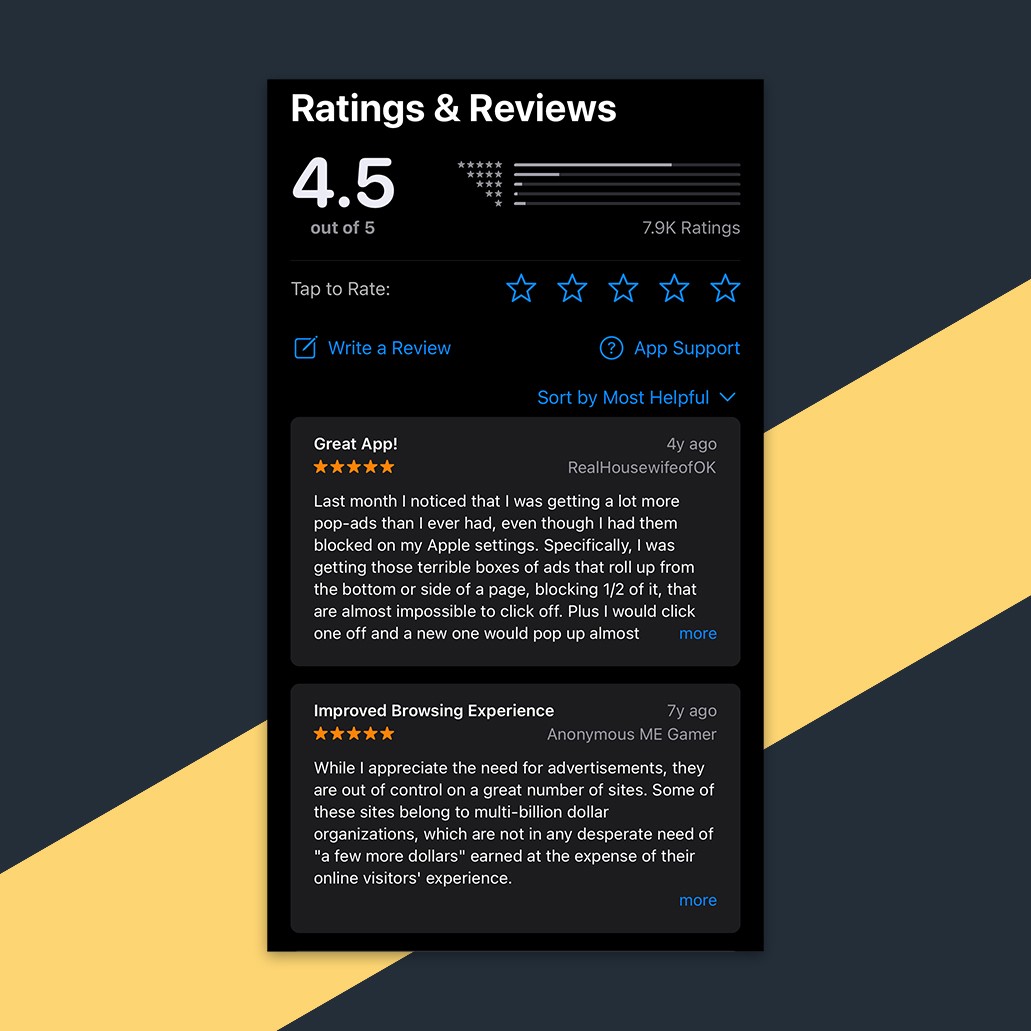
Keeping the Ads Away
Simplifying and rethinking the ad-blocking experience
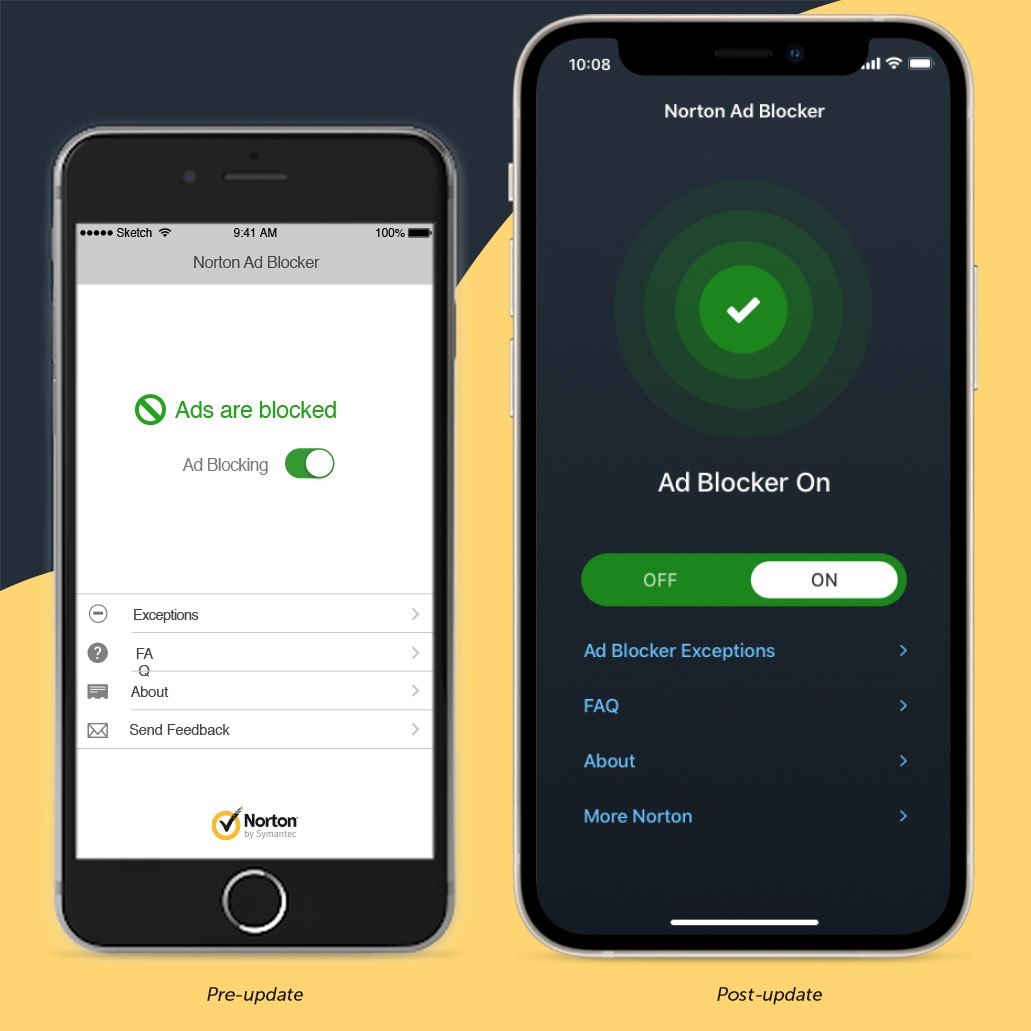
Norton LifeLock (formerly Symantec and now Gen) is a brand centered on comprehensive digital security, known for products like Norton Anti-Virus and an array of mobile security solutions. Norton Ad Blocker was a mobile app that was left untouched for over 5 years, collecting digital dust. It had not been updated for so long that it was cropped inside larger mobile screens, and I found this as an opportunity to improve this quietly popular digital product that wasn't on-brand with our rebrand (2019) along with Norton360 mobile security product.
Timeline
2 weeks
Background/Context
Norton Ad Blocker provides distraction-free browsing on mobile devices by blocking ads and trackers, speeding up content loading, conserving bandwidth, minimizing ad clutter, extending battery life, and protecting user privacy without sharing browsing history.
Problem
During Norton’s rebranding and the overhaul of its design systems and library, I noticed that one of the most frequently used and popular features was missing from the roadmap. Leadership had overlooked it, deeming the product less valuable since it was one of the few free offerings on the market. However, I recognized its potential and saw an opportunity beyond its price point.
The mobile app, untouched for years, remained widely used and highly popular. This presented a chance not only to update the product for compatibility with newer and larger mobile devices but also to align it more closely with the new brand guidelines and revamped design system.
Goal
To align one of the company’s most popular products with the new brand guidelines and design system, creating business opportunities while delivering a positive impact on users and their experience. This redesign wasn’t about overhauling the app or introducing new features. Instead, the focus was on preserving the familiarity valued by customers who relied on the product for a seamless and immersive web browsing experience, while thoughtfully integrating the updated branding elements.
Role/Contribution
Led design and product initiatives: conceived and pitched a revamp concept, developed the design strategy and requirements, designed the end-to-end user experience, and produced supporting marketing materials. Other stakeholders included a PM, 3 devs, and point of contact from marketing.
I pitched this idea to the director of software development, who acted as a PM as this product was not on the business/company roadmap…
Early Stage
After pitching the idea of revamping Norton Ad Blocker to the lead PM (why it would benefit the business and how it would be relatively "low effort"), leadership eventually approved with the following conditions: it was not to be worked on during work hours, it could not take up our resources (so no testing), and it had to be completed within a month.
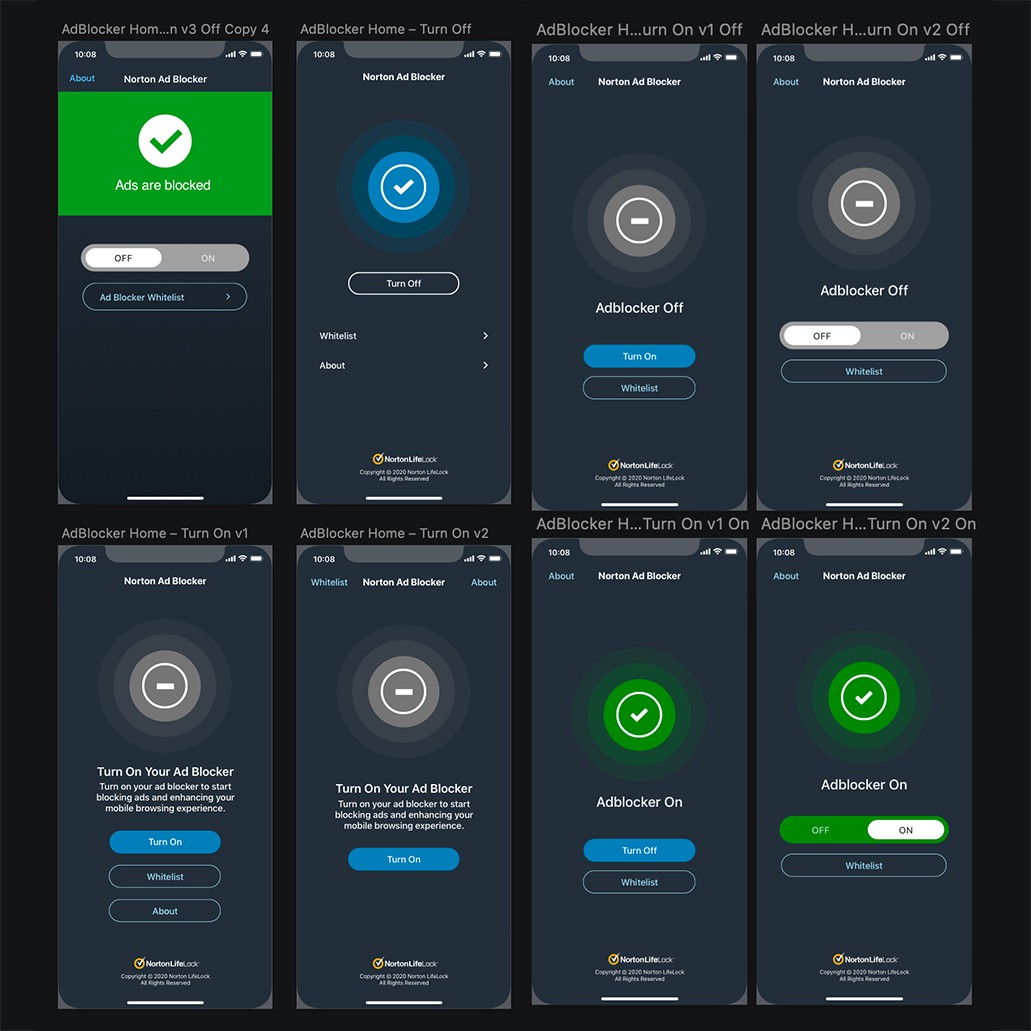
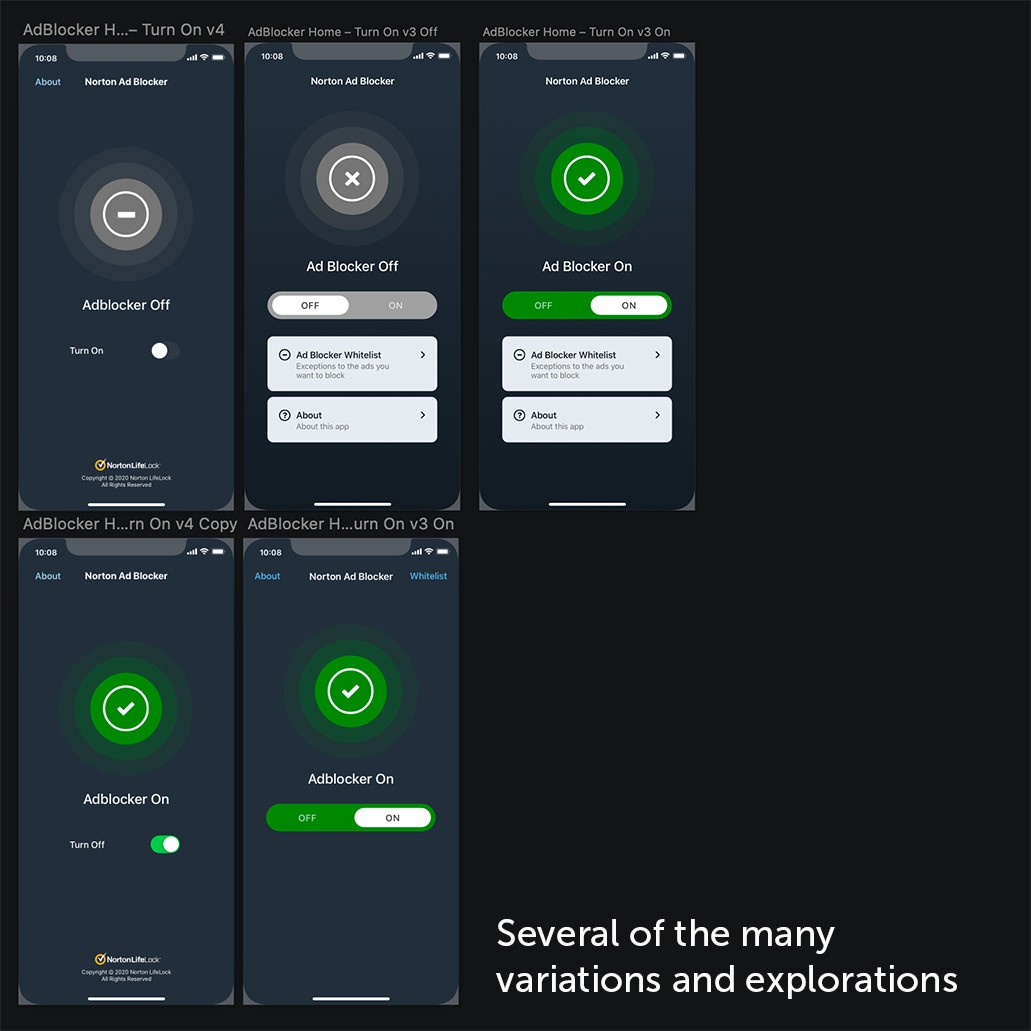
Once the PM, few engineers, and I agreed, we were all excited to get started. The process started off with ultimately figuring out what our goal and business goals were – this then led us to hold white boarding sessions, wireframing, and refinidng requirements. Luckily, we decided as a team that since the current app was successful, we didn't want to make too many changes, only upgrades.
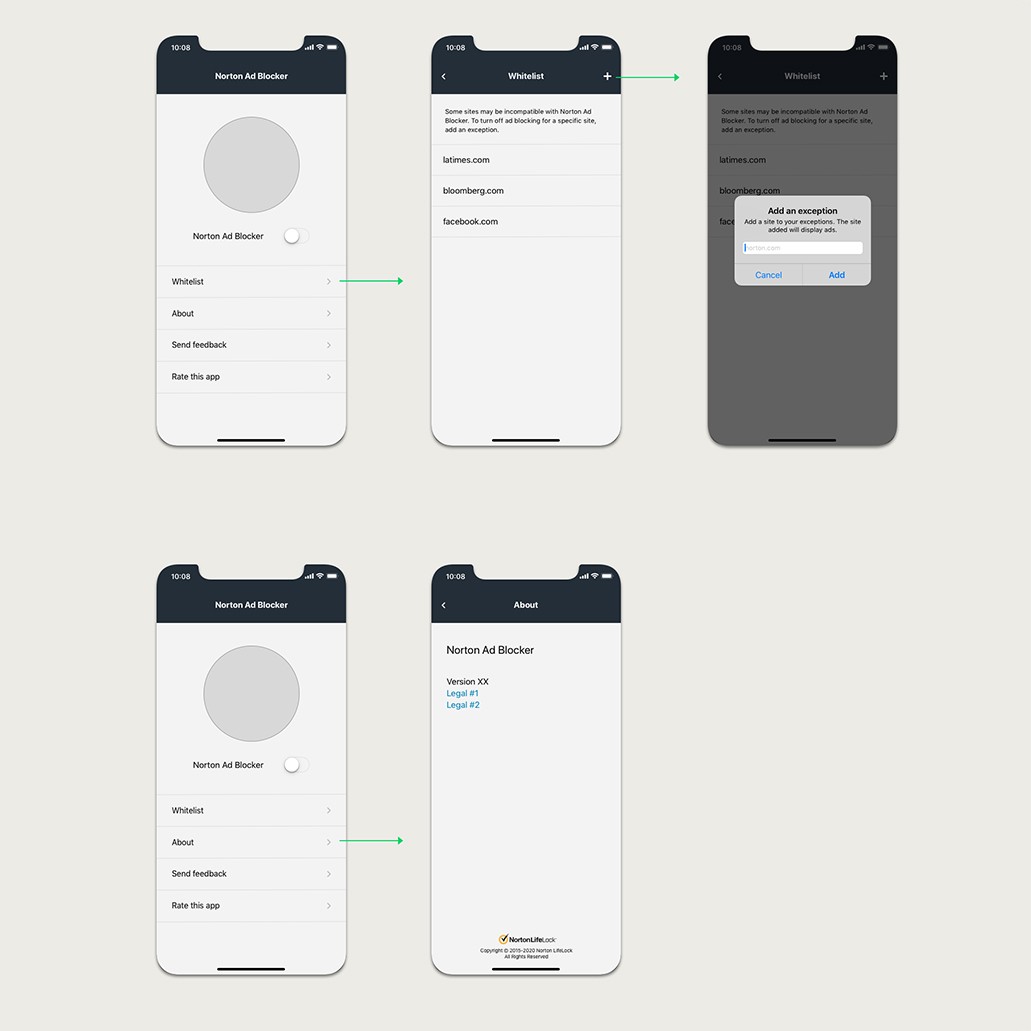
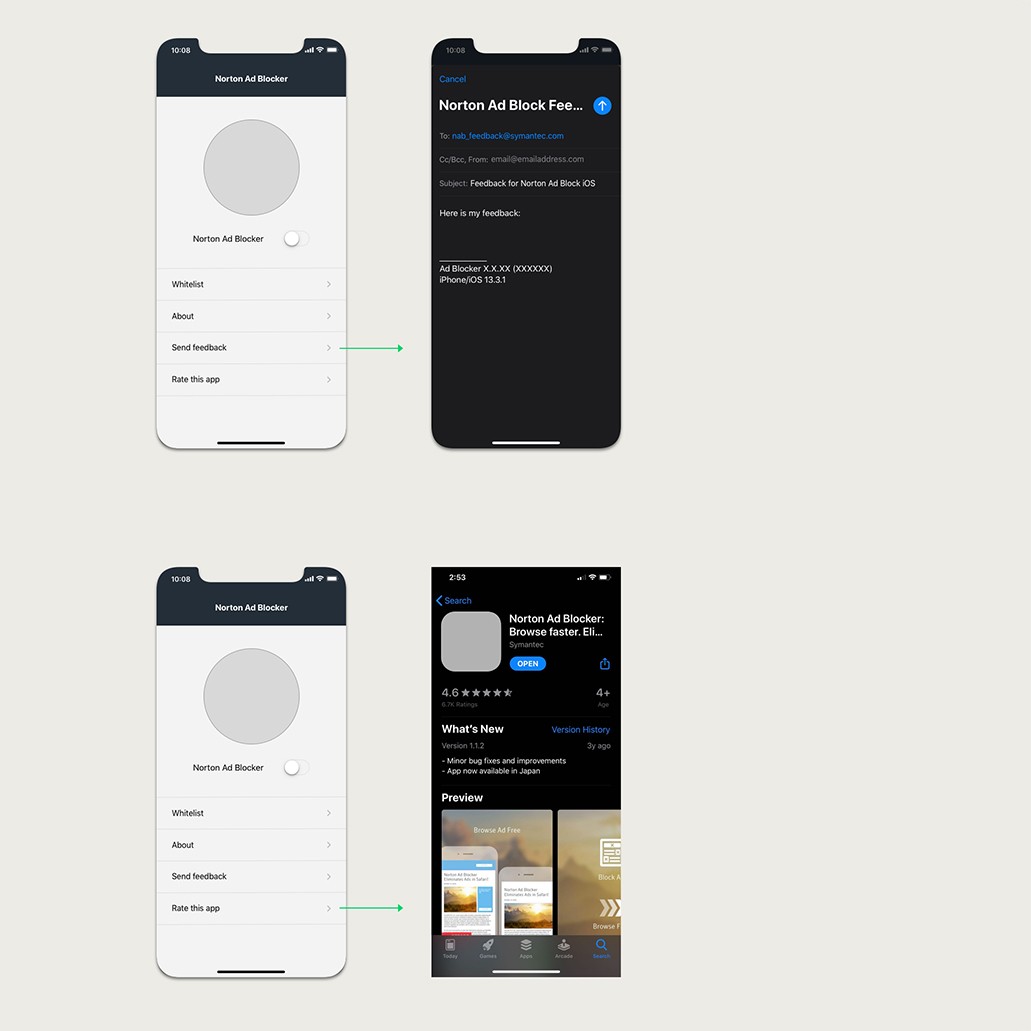
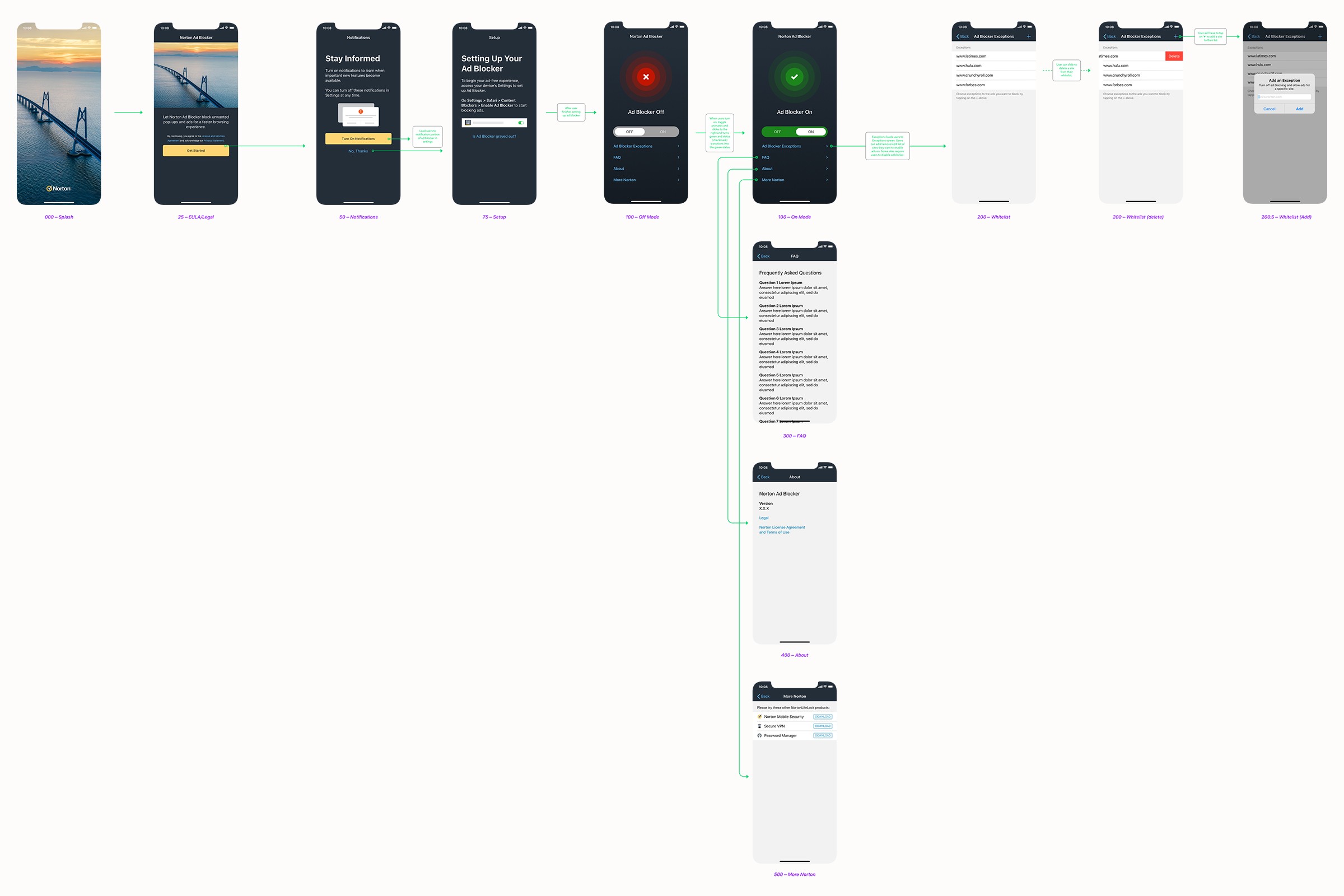
We quickly ran through wireframe critiques, selected the direction we felt made most sense, and turned our sketched out ideas into higher-fidelity wireframes. Once we ran through every scenario we could see based off our data (both happy and unhappy flows), we moved quickly into mock iterations.
The Side Quest
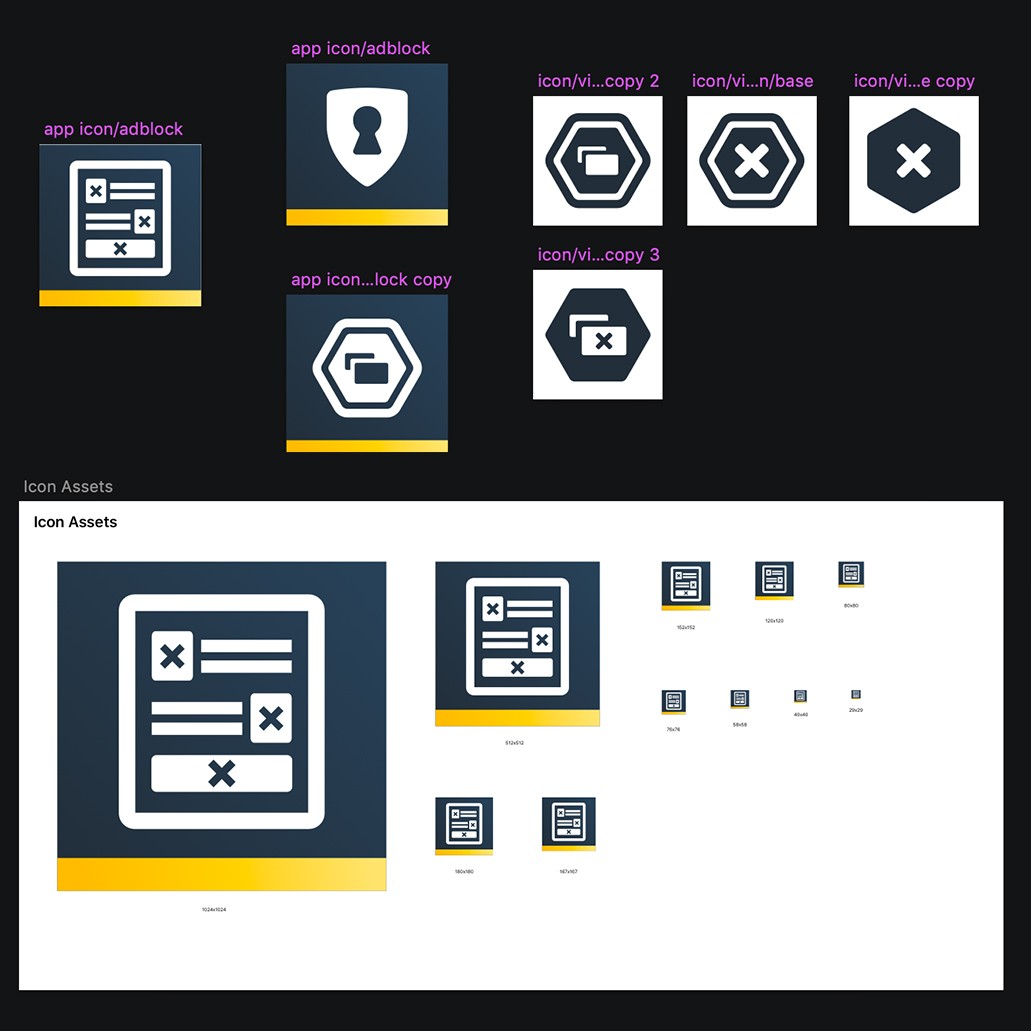
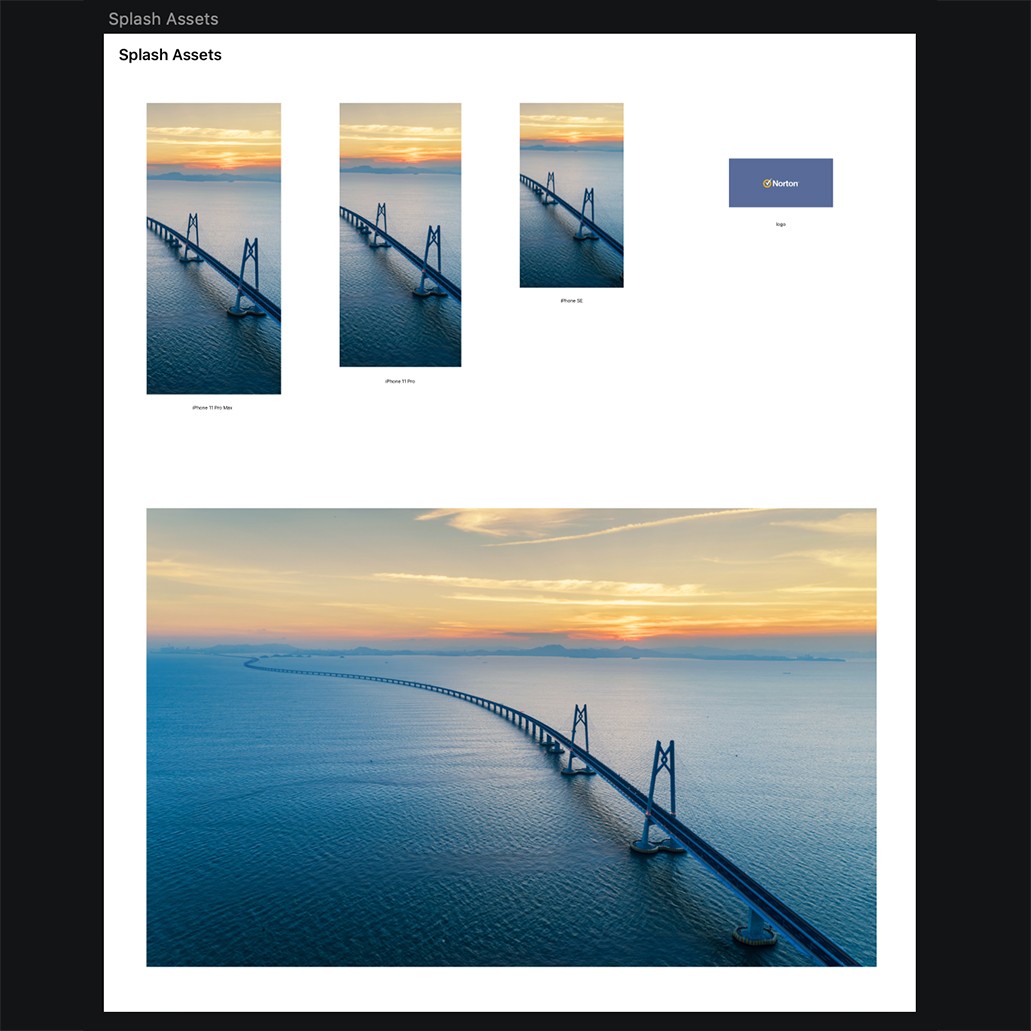
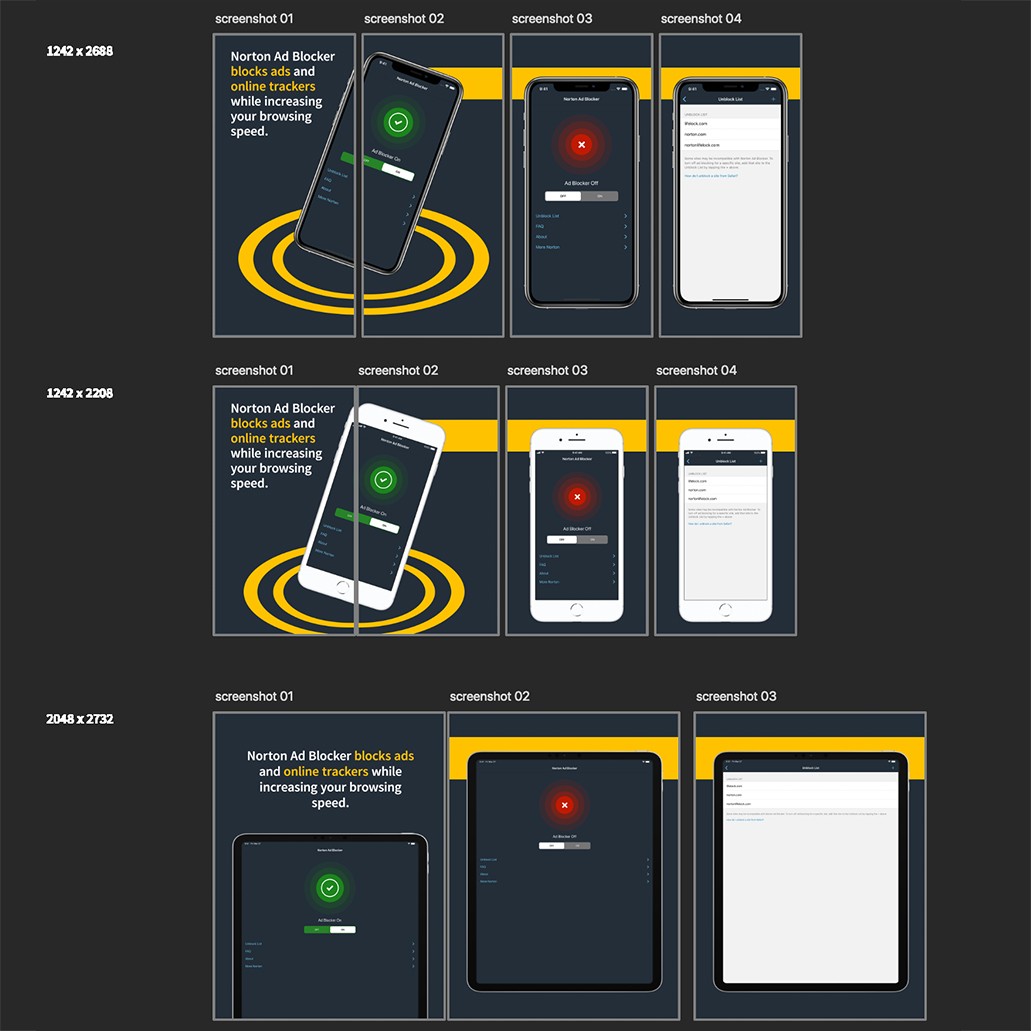
Separately, I collaborated with the marketing team to ensure that all app icons, splash images, app store descriptions, and screenshots were reviewed and approved in accordance with our internal branding and marketing guidelines. After receiving feedback from marketing, I had to quickly create variations of the product app icon and marketing imagery to be ready for submission to the app store.
Conclusions + Challenges
The team and I finalized the design within just two Saturdays, dedicating a few hours each to complete the work. Marketing provided a fast turnaround, approving all icons and imagery and delivering the necessary verbiage for this initiative. After handing off the design, I collaborated closely with our tight-knit development team, who efficiently built the product and secured approval for release.
However, the process was not without challenges. In addition to resource and time constraints, the team felt uneasy about launching without conducting tests or QA prior to the wide release. This hesitation stemmed partially from leadership's lack of enthusiasm for allocating time and effort to this product, which led us to feel more pressure to make sure this was a success.
Results & Impact