Making Digital Security Feel Simple
Designing Norton 360 as an all-in-one digital protection suite
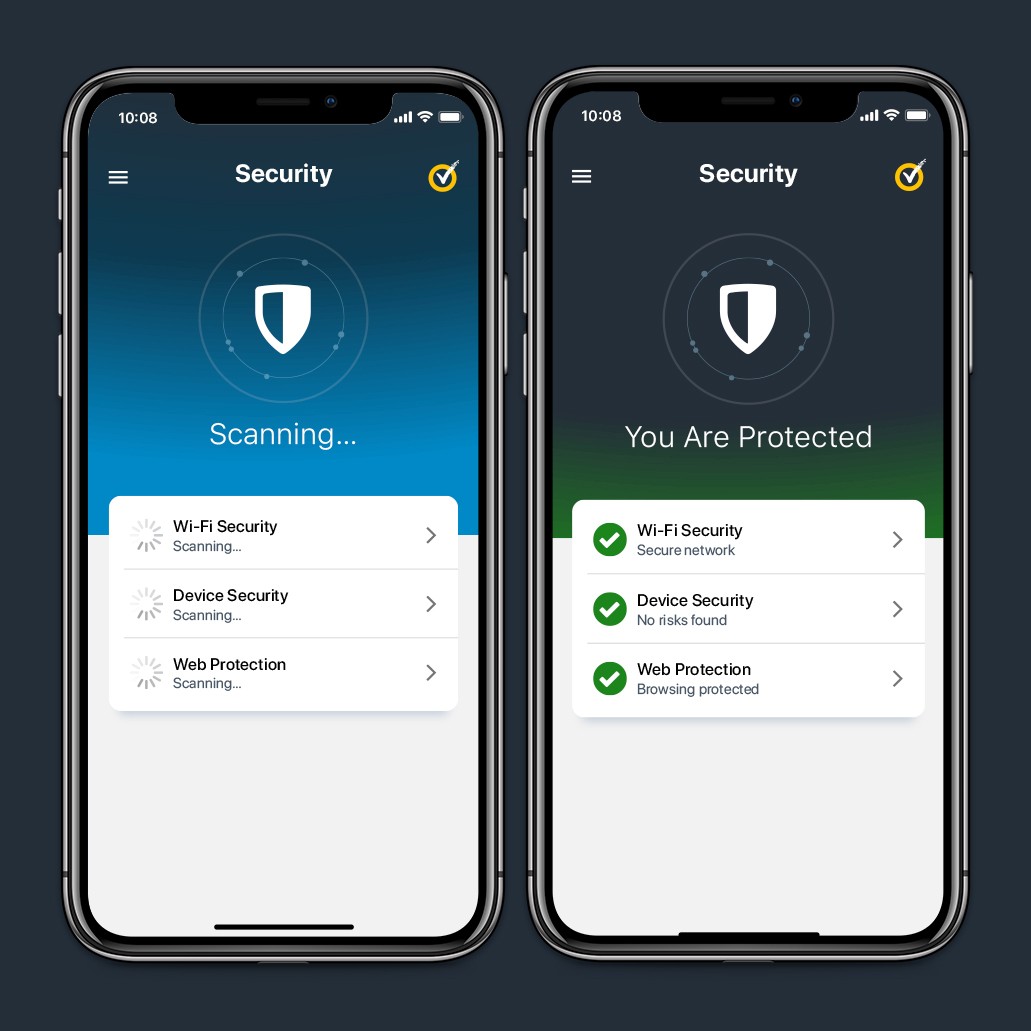
Norton is a cybersecurity company with a long legacy. Norton has various security features and products. Designed for individuals who prioritize cybersecurity, Norton 360 simplifies how users protect their personal information and devices—shaped by customer feedback and built by Norton’s internal design team.
Timeline
10 months
Background/Context
Norton 360 is a mobile security platform that consolidates key protection features into a single, user-friendly experience, addressing customer feedback around complexity and trust.
Problem
Users frequently expressed frustration with managing multiple Norton products, each with separate logins and workflows. To address this, we sought to create a unified suite that simplified the experience. This effort coincided with Norton’s rebranding after part of Symantec was sold to Broadcom, positioning Norton as the household name for consumer security. A major challenge emerged: the team had no clear requirements or roadmap defining which features and products would be part of the new, streamlined solution.
Goal
To rethink how to make login and managing multiple feature-based products easier for our users, but also managing the rebranding process and a revamp to our design systems and library, all at the same time seamlessly.
Role/Contribution
I served as one of the lead designers, focusing on iOS mobile design alongside an Android lead. The mobile team led this effort in line with the business’s mobile-first strategy. I helped refine the project roadmap, requirements, and overall scope, and conducted usability testing and user research. Throughout the project, I collaborated closely with product, marketing, copywriters, and developers to ensure a cohesive, user-centered experience.
From day one, I partnered closely with product and engineering, turning initial customer feedback into a project that quickly took shape and came to life.
Early Iterations & Ideas
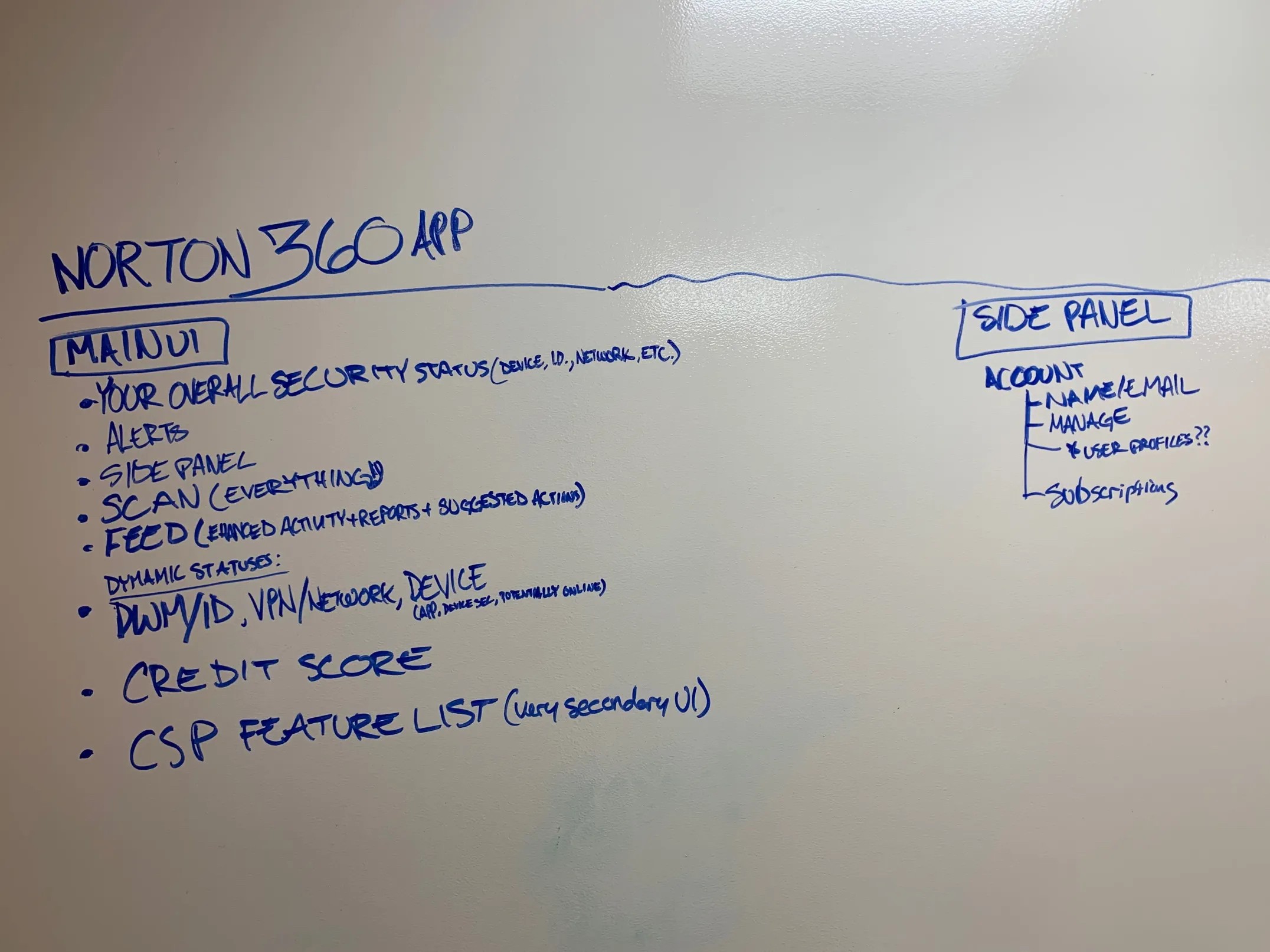
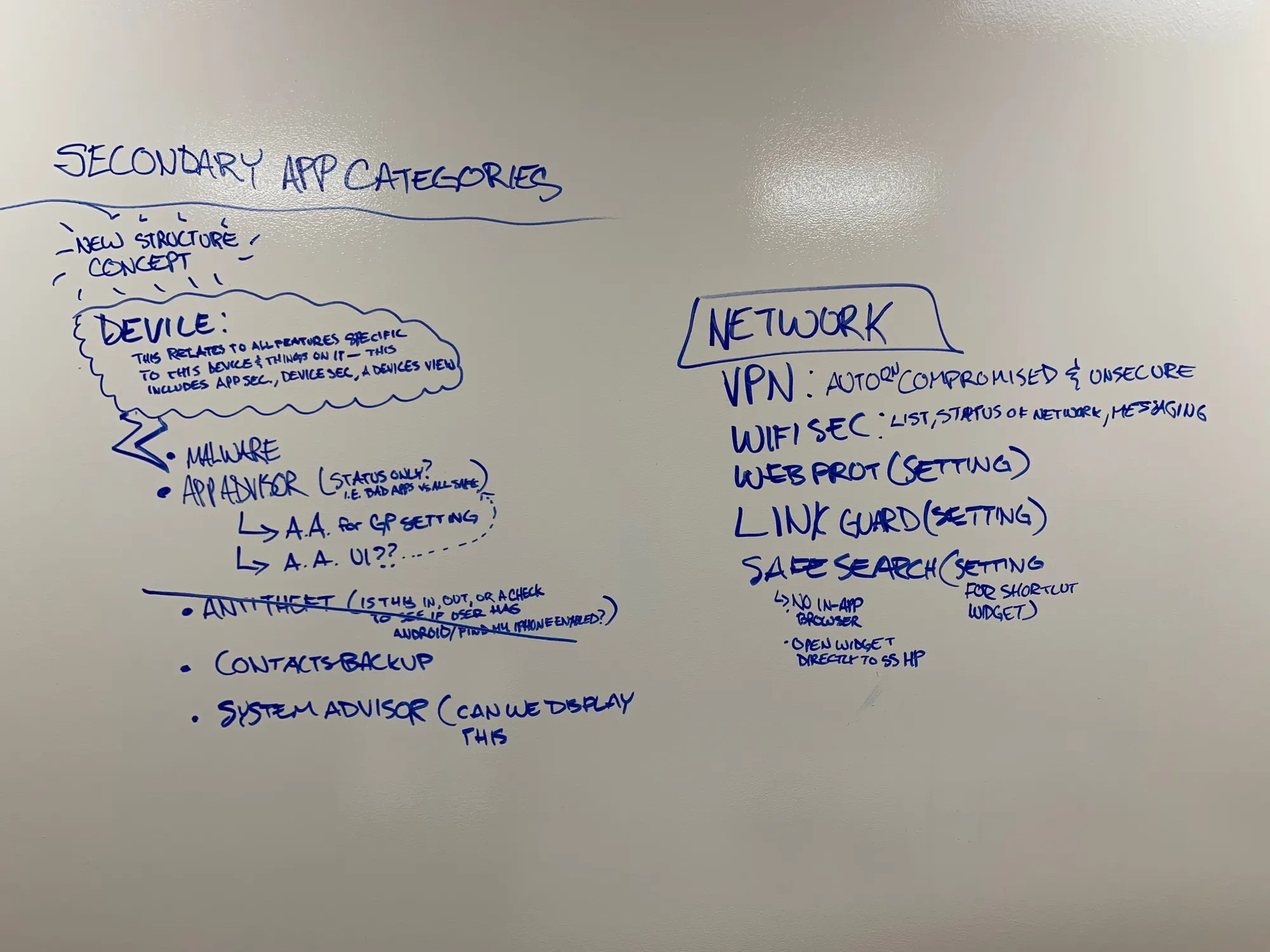
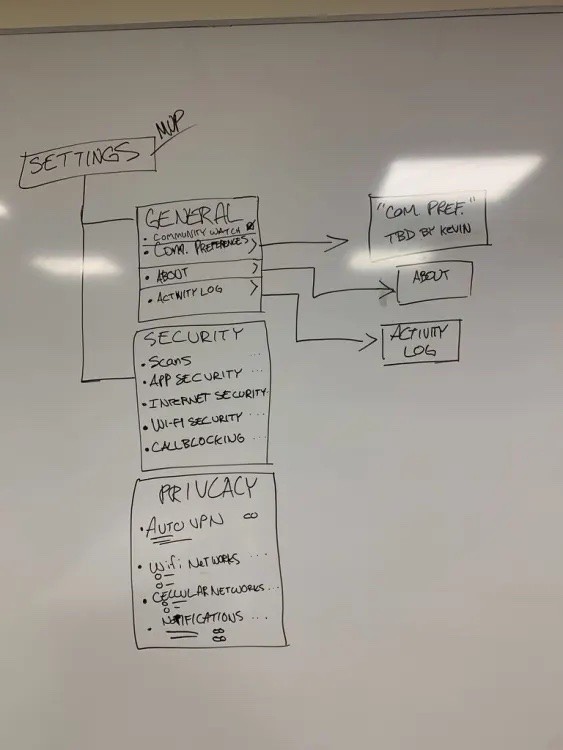
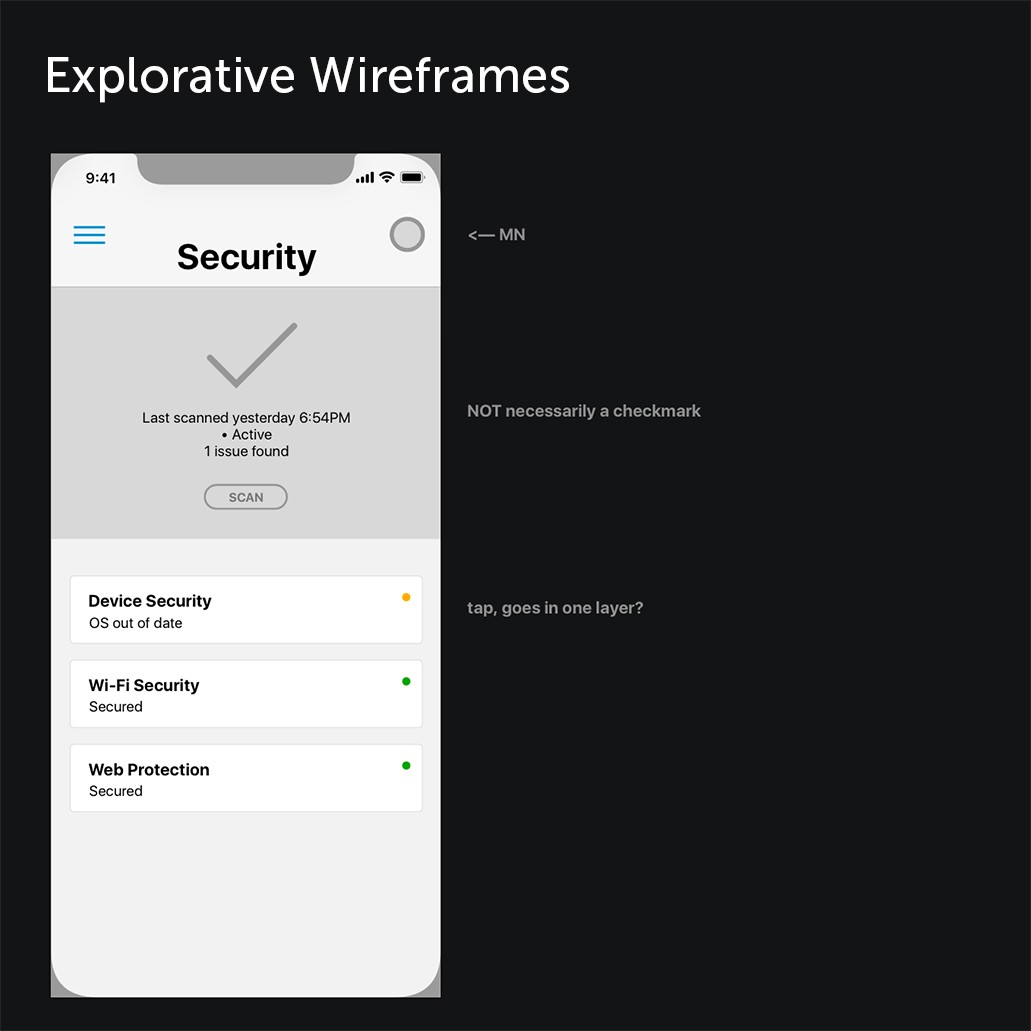
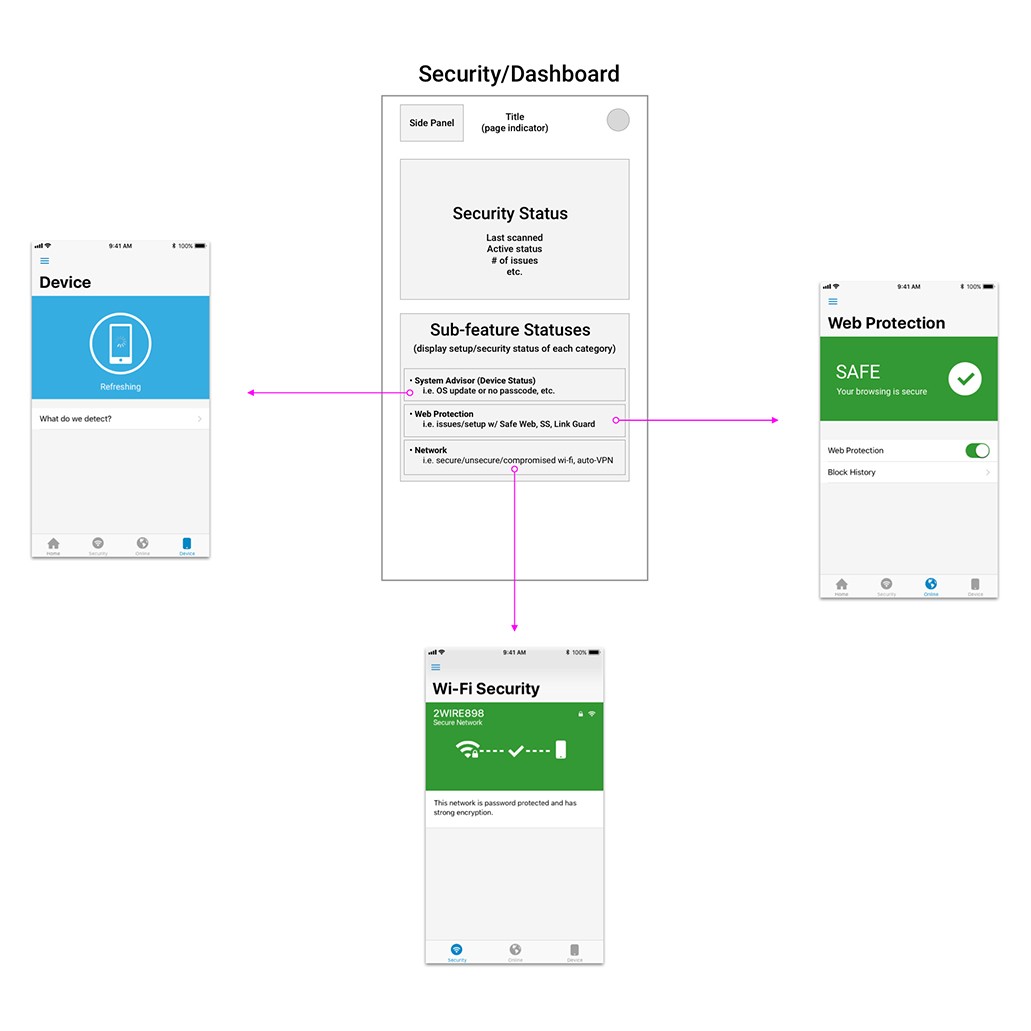
The design team took the initiative to kickstart the ideation process and facilitate discussions to resolve this constant user feedback. Without established requirements from project managers or developers, and with uncertainty lingering within the design team, we embarked our journey on wireframing, crafting user flows, and envisioning what we deemed to be the optimal security product (we decided this during discussions and brainstorming with gathered data).
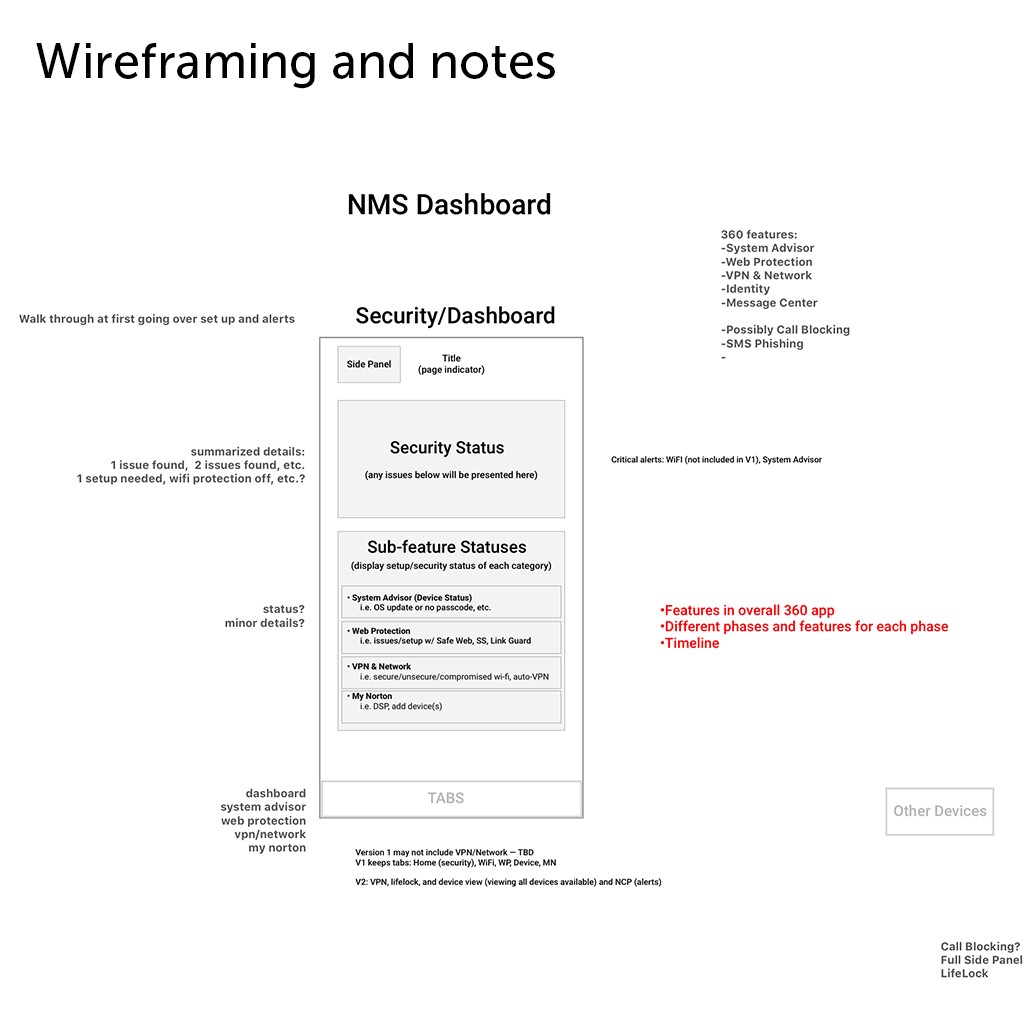
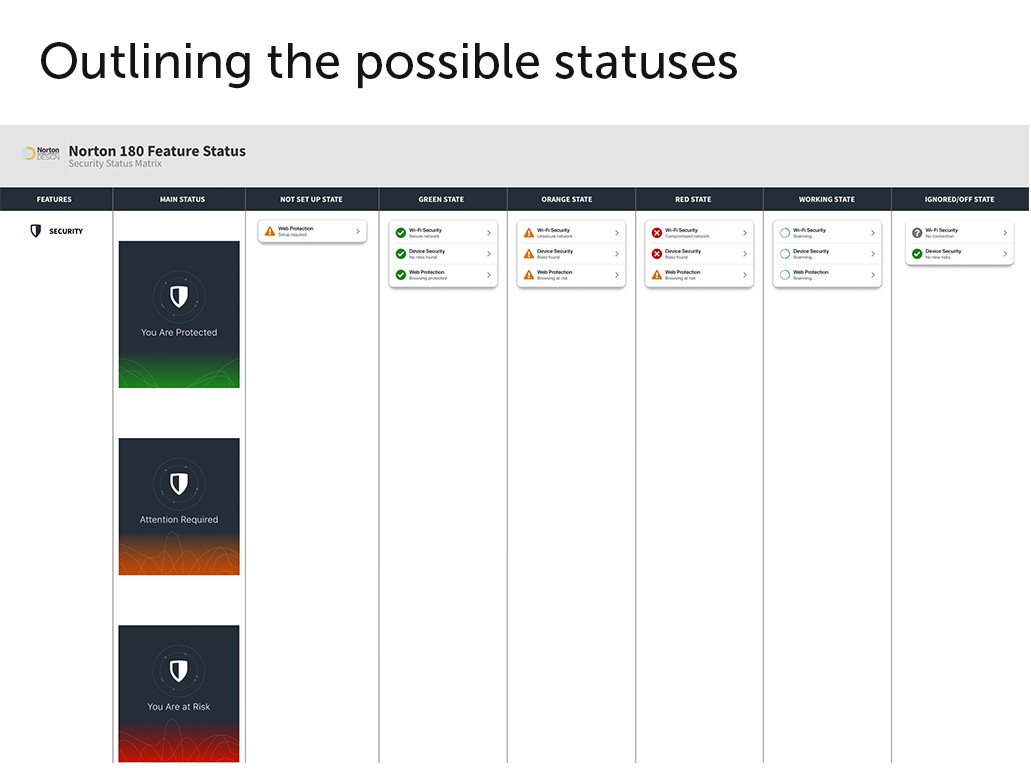
Guided by customer preferences and security priorities, we identified the most critical products and key user concerns. Over three months of iterative exploration, we worked closely with project managers and development teams to align on insights, define core requirements, and shape schedules and release plans that set the direction for the project.
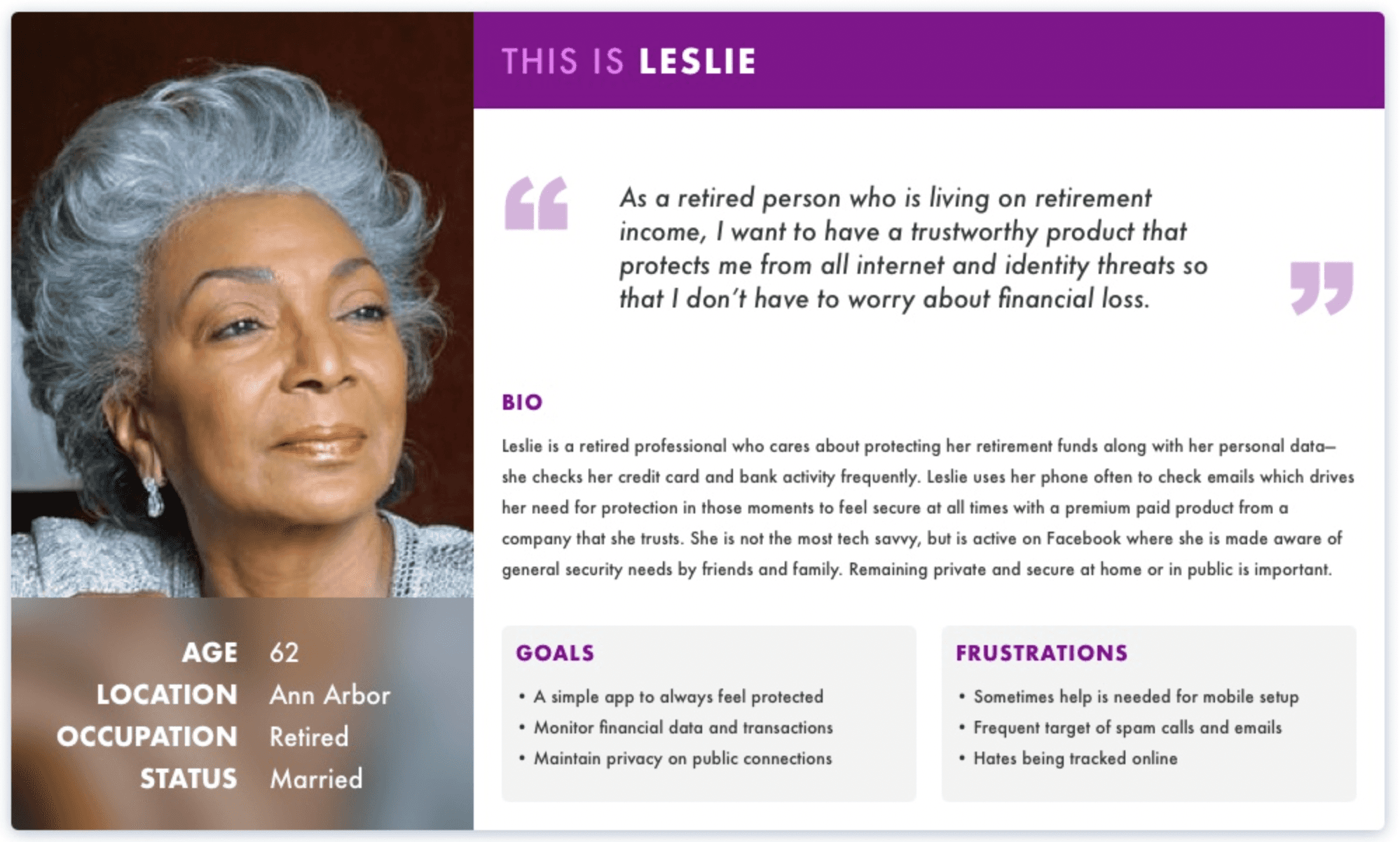
Research + Persona
Leveraging existing customer feedback and data, I led the initial exploration of the information architecture and assessed feature and product requirements. From this, we developed user personas to define the target demographic from a business perspective and to provide a shared framework for internal teams—ensuring design decisions remained user-centered and strategically aligned.
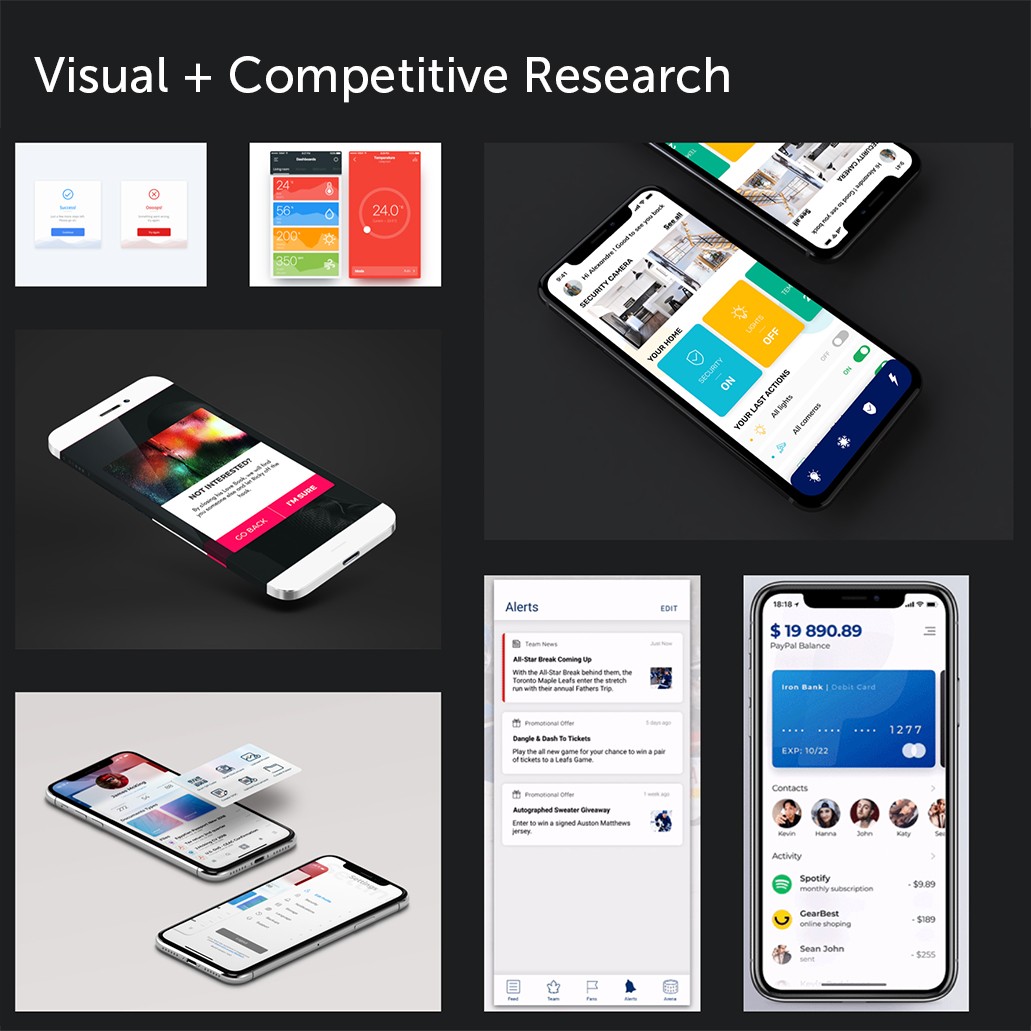
While We Wait…
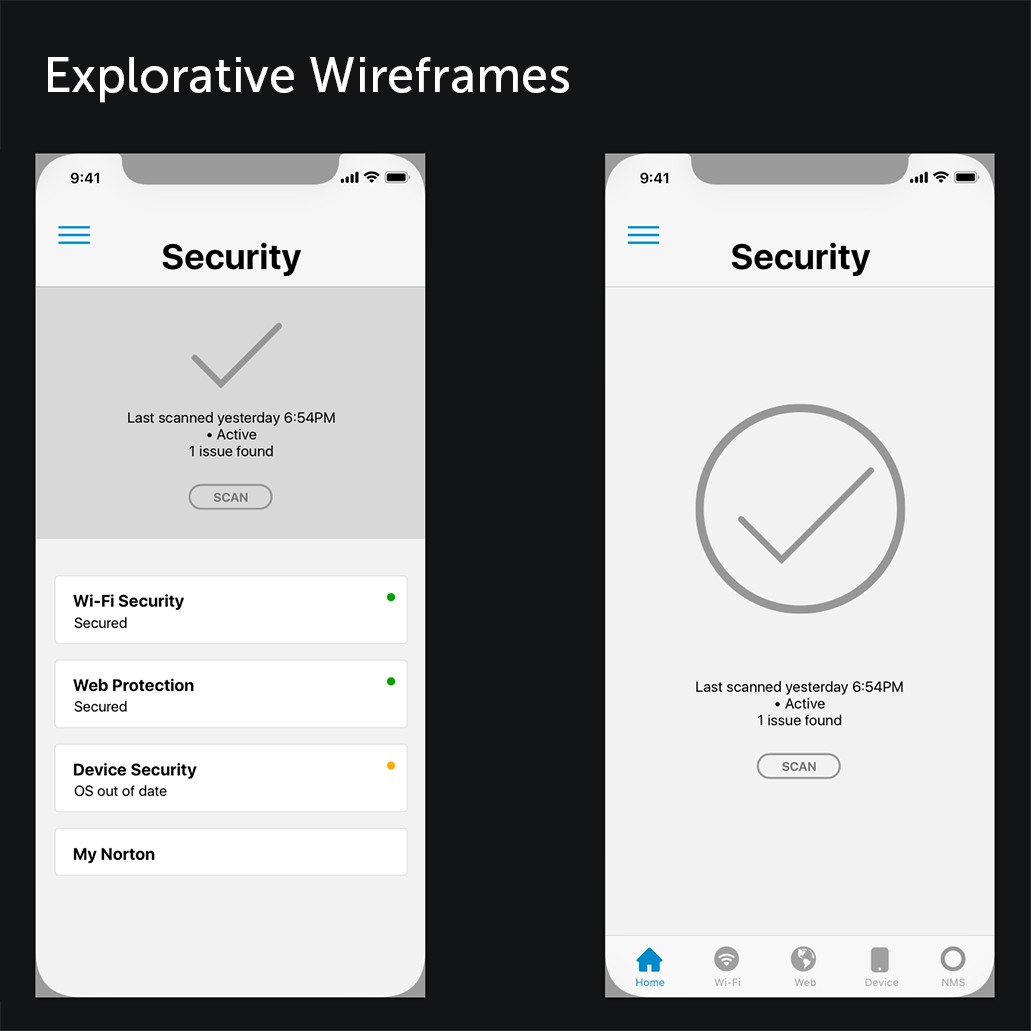
We refined the initial wireframe concepts, developing them into low-fidelity mockups. At the same time, we defined which features would be included and mapped out where each feature would be directed within the experience. This was during the time where product and business still couldn't decide if we would move forward with this product initiative.
Early Research
Throughout the project, I ran user research at multiple levels, from quick usability tests to in-depth interviews and larger-scale studies, aligning methods to the stage of design. Early insights had an immediate impact: testing revealed that the term “Scan” caused confusion, prompting us to remove it. Similarly, feedback on the color palette showed that users preferred muted, darker blues over our original lighter shades, guiding us to refine the visual design to better align with user preferences.
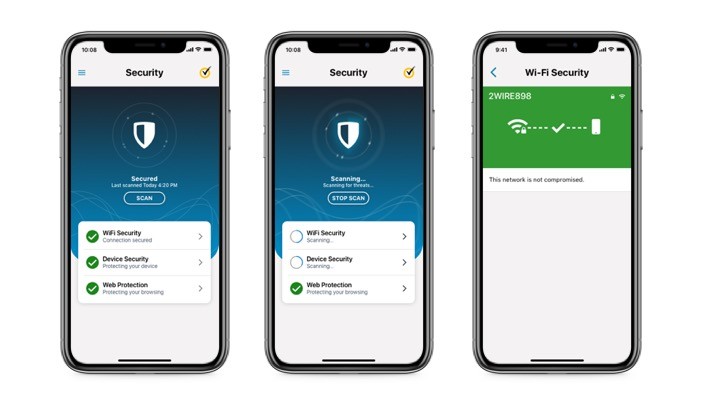
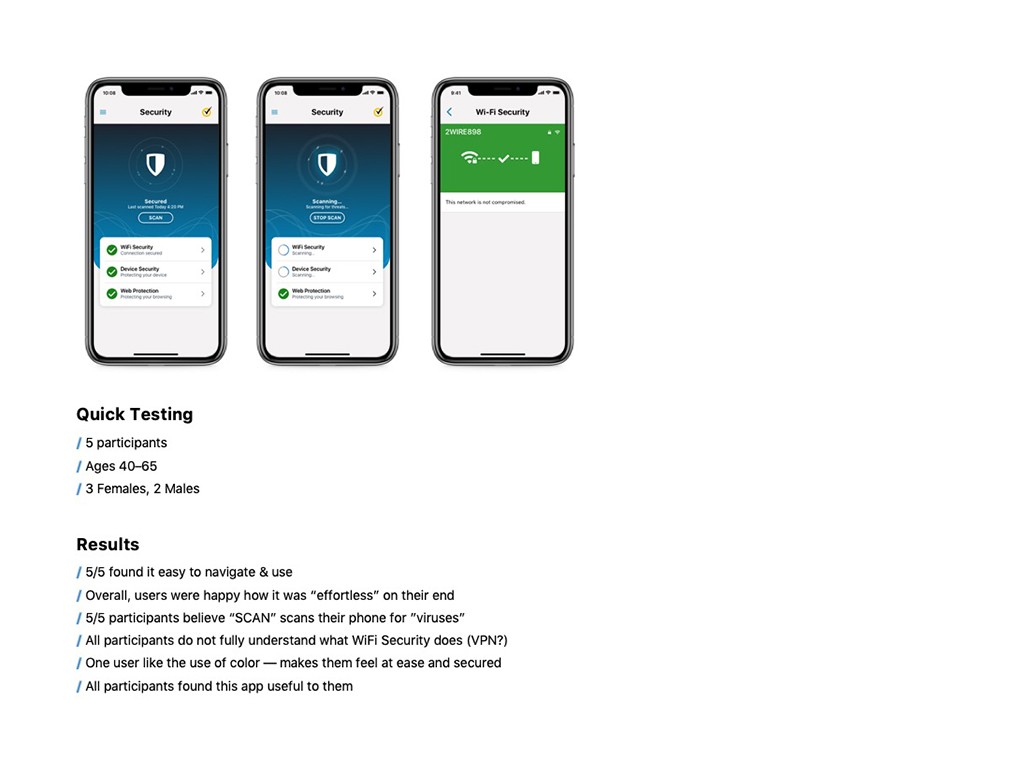
Sharing early testing insights with product and business stakeholders created momentum for the project. Leadership reviewed the results and gave the official green light, reallocating company resources to support the initiative. From there, product and design worked closely to refine requirements and define the project scope, ensuring the team had a clear, aligned foundation to execute a user-centered solution.
Explorations + Final
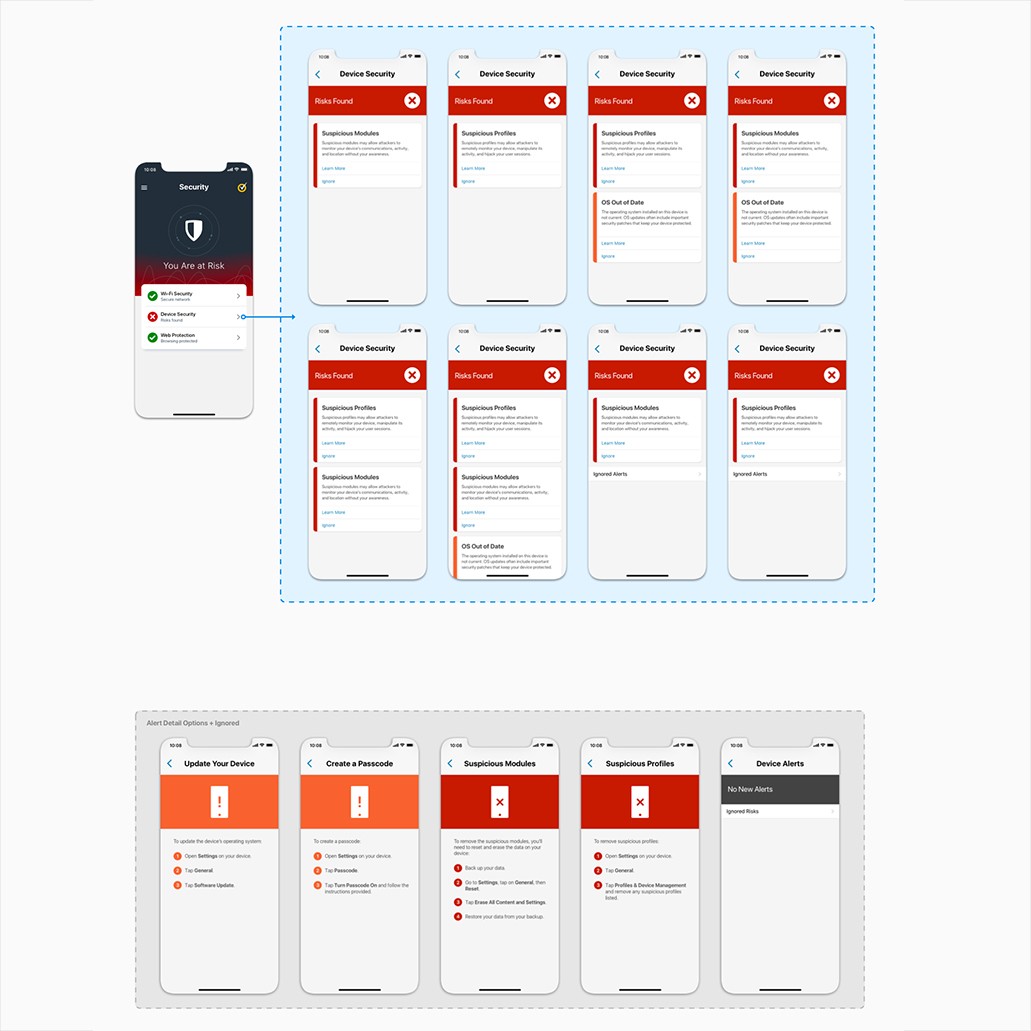
I went through various stages of design iterations and testing to further fine-tune the experience for this brand new suite of features. After a comprehensive 10-month effort, the design for the initial release was finalized, paving the way for our first rollout. Users responded positively, praising the refreshed UI, improved navigation, and the convenience of accessing all features within a single app—eliminating the need for multiple, feature-specific downloads. Building on this success, our next objective is to expand the rollout at scale and continuously refine the design for future releases.
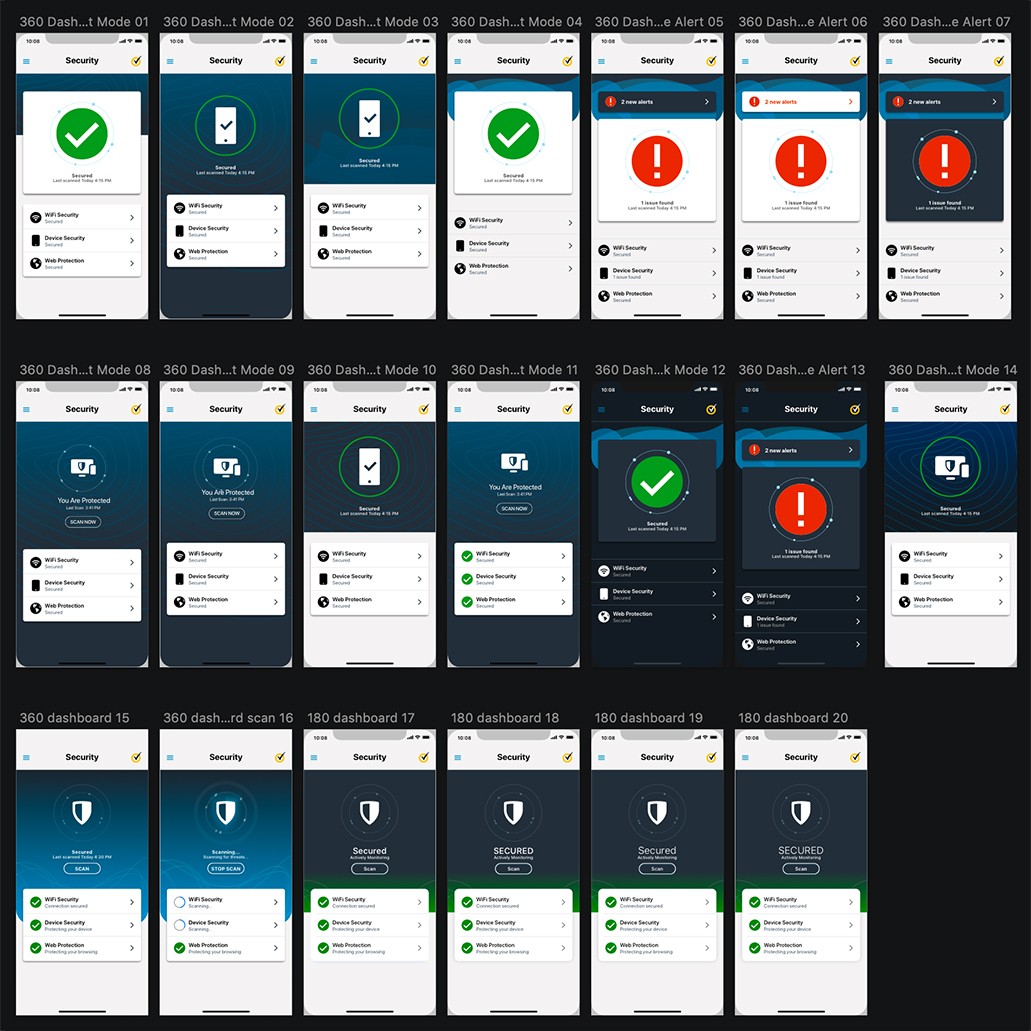
In addition to positive user feedback, we saw a significant increase in conversion rates for our subscription model. The next phase of the project focuses on adding new features to the security suite, further enhancing the user experience and overall product value.
Results & Impact
A few weeks after the initial rollout, I worked with product and design teams to review results, drawing insights from app analytics, customer feedback, and app store reviews. Users responded overwhelmingly positively, many noting the scope and impact of the improvements. These insights directly informed leadership’s decision to approve extending the update across the majority of Norton’s security features, reinforcing the value of a user-centered design approach.
New Subscription
Strong start to subscription rate, outperforming Norton Mobile Security (~70% opt-in)
Seamless Add-Ons
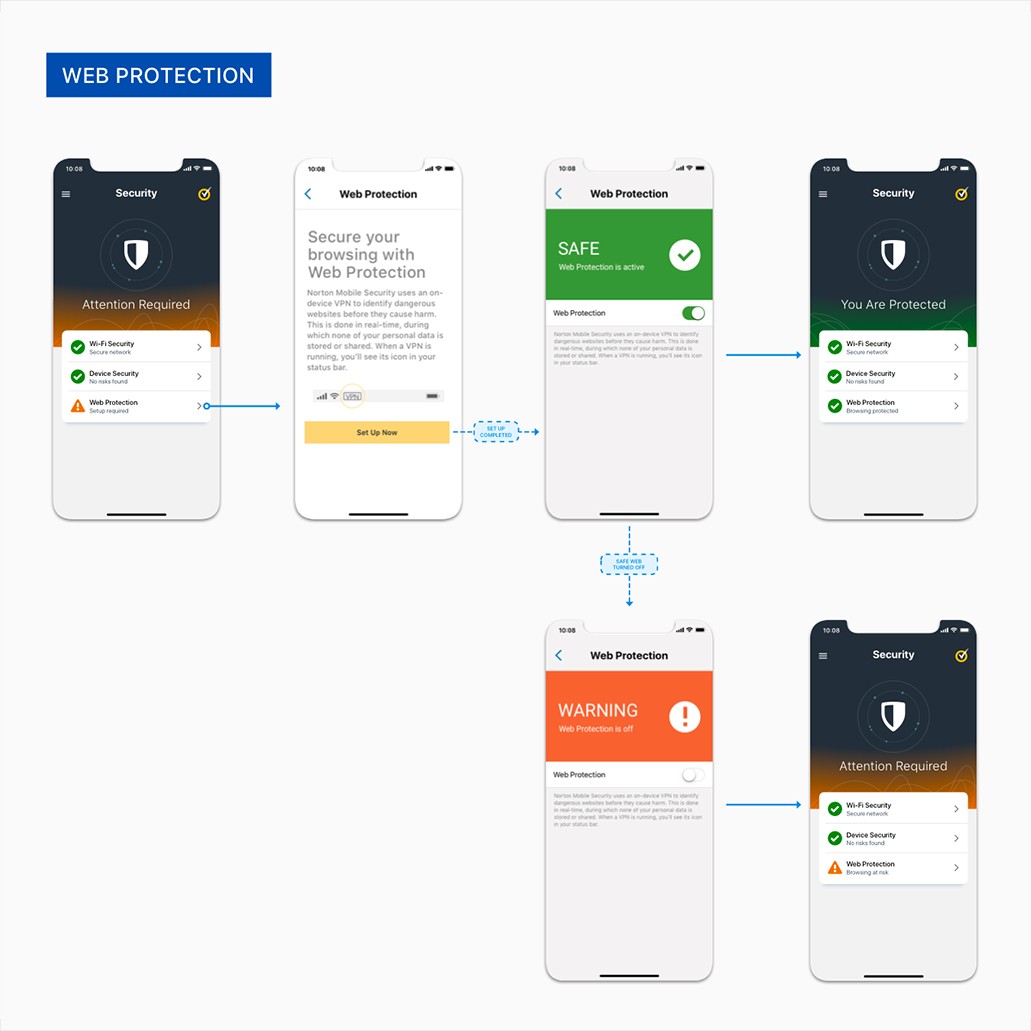
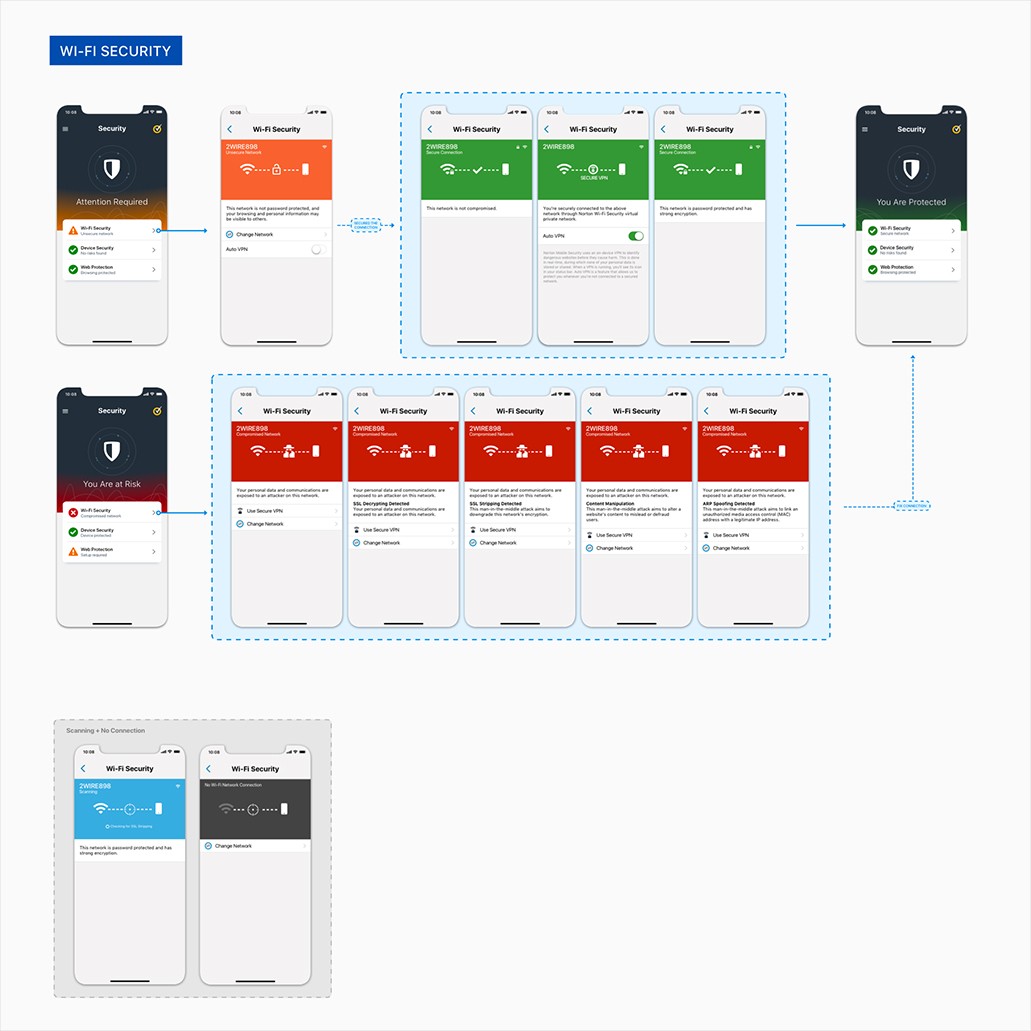
Design and product outlined additional features to add in after success
High Engagement
Similar to Norton Mobile Security, there was high rate of engagement overall